
BBQ Basics
Everything you need to understand fire, smoke, heat, and time before you start cooking.
By Midnight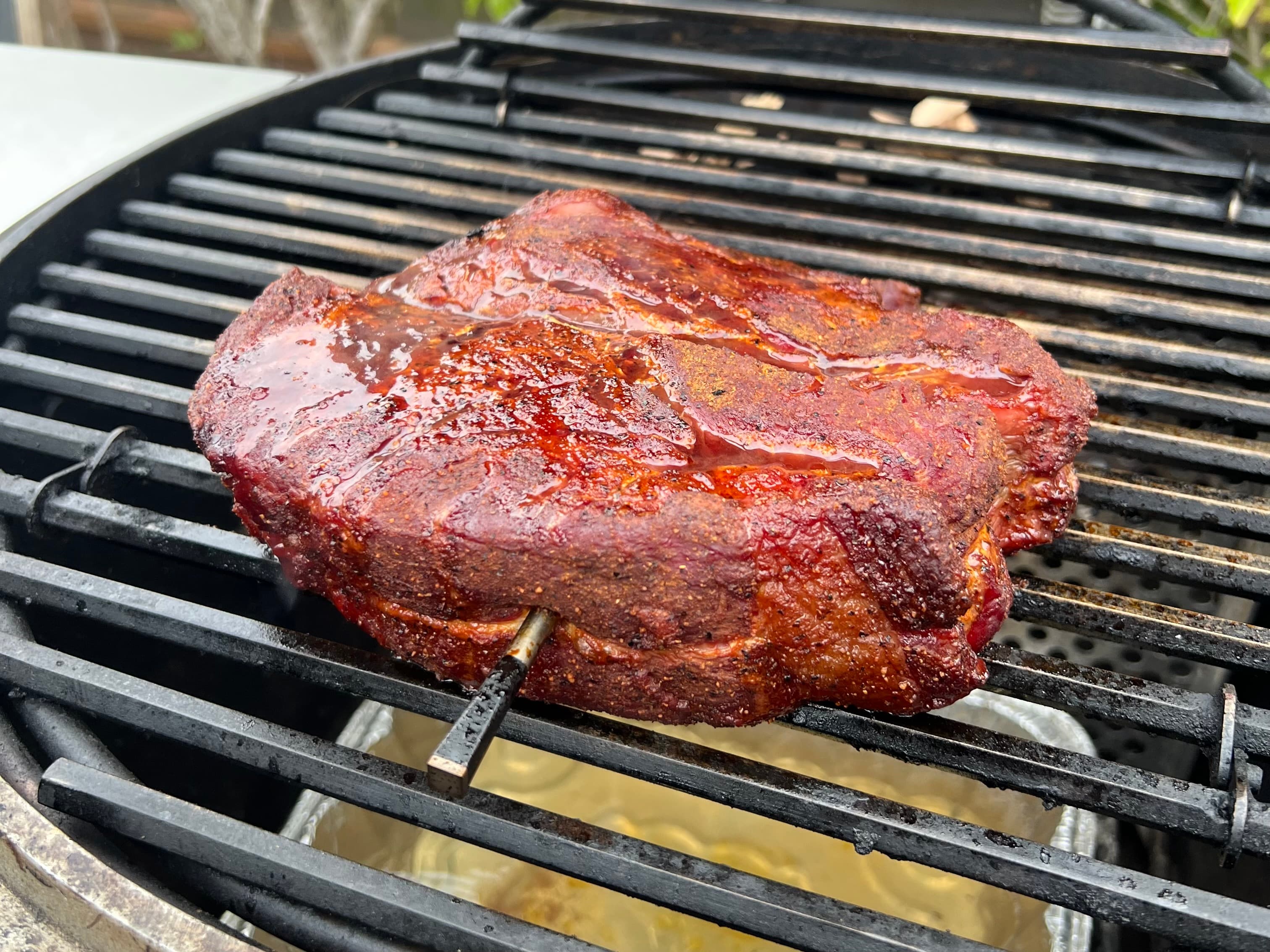
Barbecue can get complicated quickly. Spend enough time reading about it and you'll find arguments over everything from the right smoking temperature to whether brisket should be wrapped, which wood tastes best, and how often you should open the smoker. Most of those decisions matter eventually, but they aren't where you need to start.
Good barbecue comes down to a handful of fundamentals. You need to understand how heat moves through your cooker, how to maintain a clean fire, when to use direct or indirect heat, and how to recognize when meat is actually finished. Once you understand those things, recipes become much easier to follow and adapting them to your own grill or smoker becomes much less intimidating.
This guide covers those fundamentals, whether you're cooking on a kettle grill, gas grill, pellet smoker, kamado, or offset.
BBQ vs. Grilling
Grilling and barbecue both involve cooking outdoors over fire, but they use heat in very different ways. Grilling is generally hot and fast, with food placed directly over or close to the heat source. Temperatures commonly run from 400°F to well over 600°F, which makes grilling ideal for steaks, burgers, chops, sausages, vegetables, and anything else that benefits from browning quickly.
Barbecue is built around lower temperatures and indirect heat. Instead of placing the food directly over the fire, you keep it away from the heat source and close the lid, allowing hot air and smoke to circulate around it. Traditional barbecue temperatures usually fall somewhere around 225°F to 300°F, and cooking time is measured in hours rather than minutes.
That slower cooking is particularly useful for cuts such as brisket, pork shoulder, and ribs. These cuts contain connective tissue that can make them tough when cooked quickly. Given enough time at a lower temperature, that connective tissue begins to break down while fat renders throughout the meat. The result is the tenderness we associate with barbecue.
The distinction isn't absolute. Some of the best outdoor cooking uses both techniques. A thick steak can be slowly smoked before being finished over a hot fire. Chicken can cook almost entirely with indirect heat before moving over the coals to crisp the skin. Ribs can spend hours away from the fire and get a quick finish over direct heat.
Understanding those two types of heat is ultimately more useful than worrying about whether something technically counts as grilling or barbecue.
Choosing Your Setup
There is no single best grill or smoker. What matters is how you want to cook, how much attention you want to give the fire, and what kinds of food you expect to make most often.
Charcoal
A charcoal grill is one of the most flexible places to start. By arranging the charcoal on one side of the grill, you can create a hot direct zone over the coals and a cooler indirect zone on the opposite side. Add a few chunks of hardwood, close the lid, and the same inexpensive grill can smoke ribs, pork shoulder, chicken, and even brisket. Charcoal requires more fire management than gas, but learning to control that fire teaches you skills that transfer to almost every other kind of barbecue.
Gas
Gas grills trade some of that fire management for convenience. They heat quickly, respond immediately when you adjust a burner, and make it easy to create multiple temperature zones. They don't naturally produce the same smoke profile as charcoal or wood-burning cookers, but they're excellent for everyday grilling and indirect roasting.
Pellet
Pellet grills take convenience even further. An electric controller automatically feeds compressed hardwood pellets into a burn pot to maintain the temperature you select. This makes them particularly useful for long cooks where maintaining a steady temperature for eight or twelve hours would otherwise require regular attention. You still get real wood combustion and smoke, although the smoke flavor tends to be milder than what you'll get from a traditional offset.
Kamado
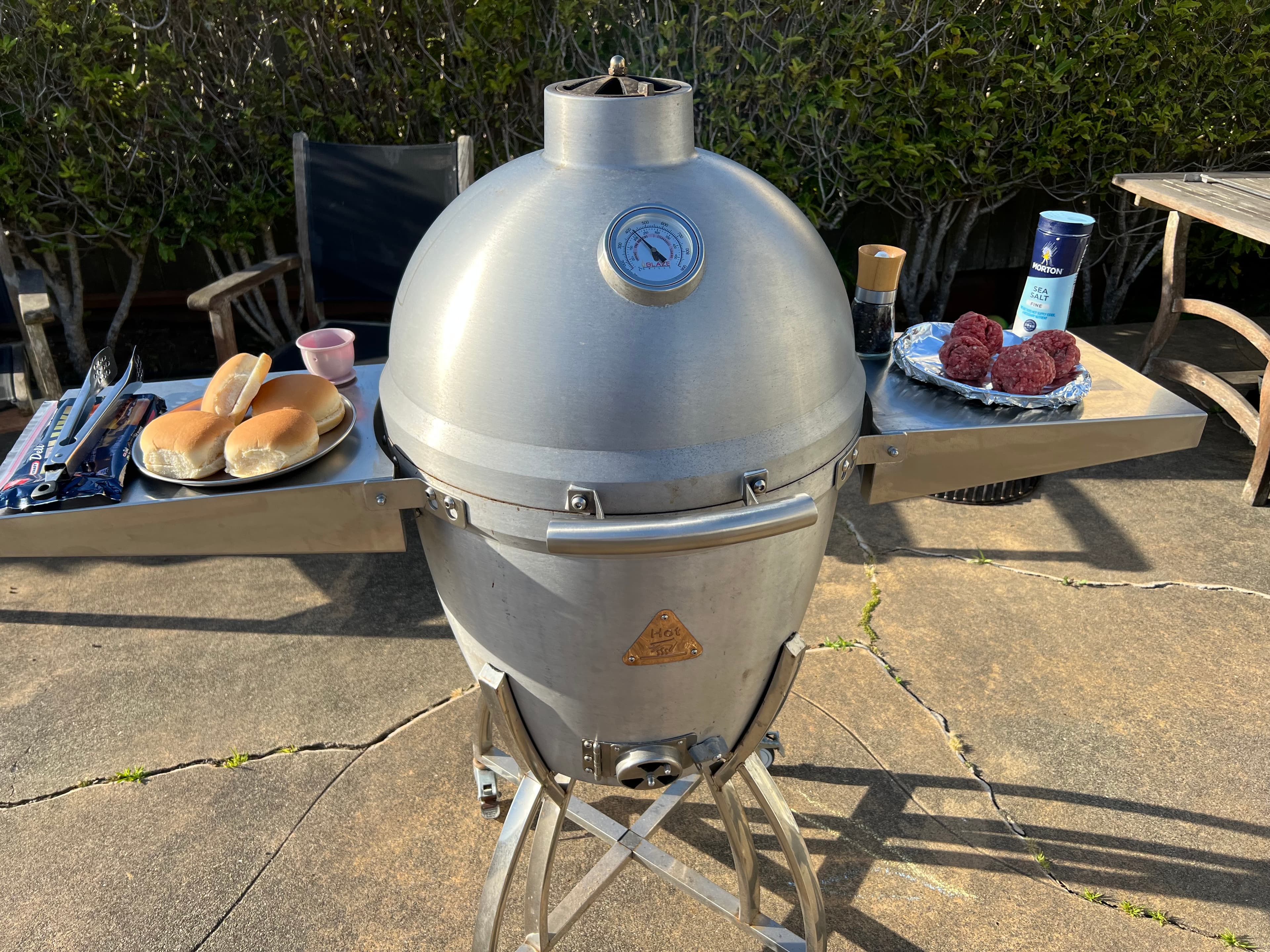
Kamado grills use a different approach. Their thick ceramic bodies retain heat extremely well, allowing them to maintain low smoking temperatures for hours while using relatively little charcoal. They can also reach extremely high temperatures for pizza and searing. That range makes a kamado one of the most versatile outdoor cookers you can own. The downside is that all that thermal mass works against you if you overshoot your target temperature. Once the ceramic gets hot, cooling it back down takes time.
Offset Smokers
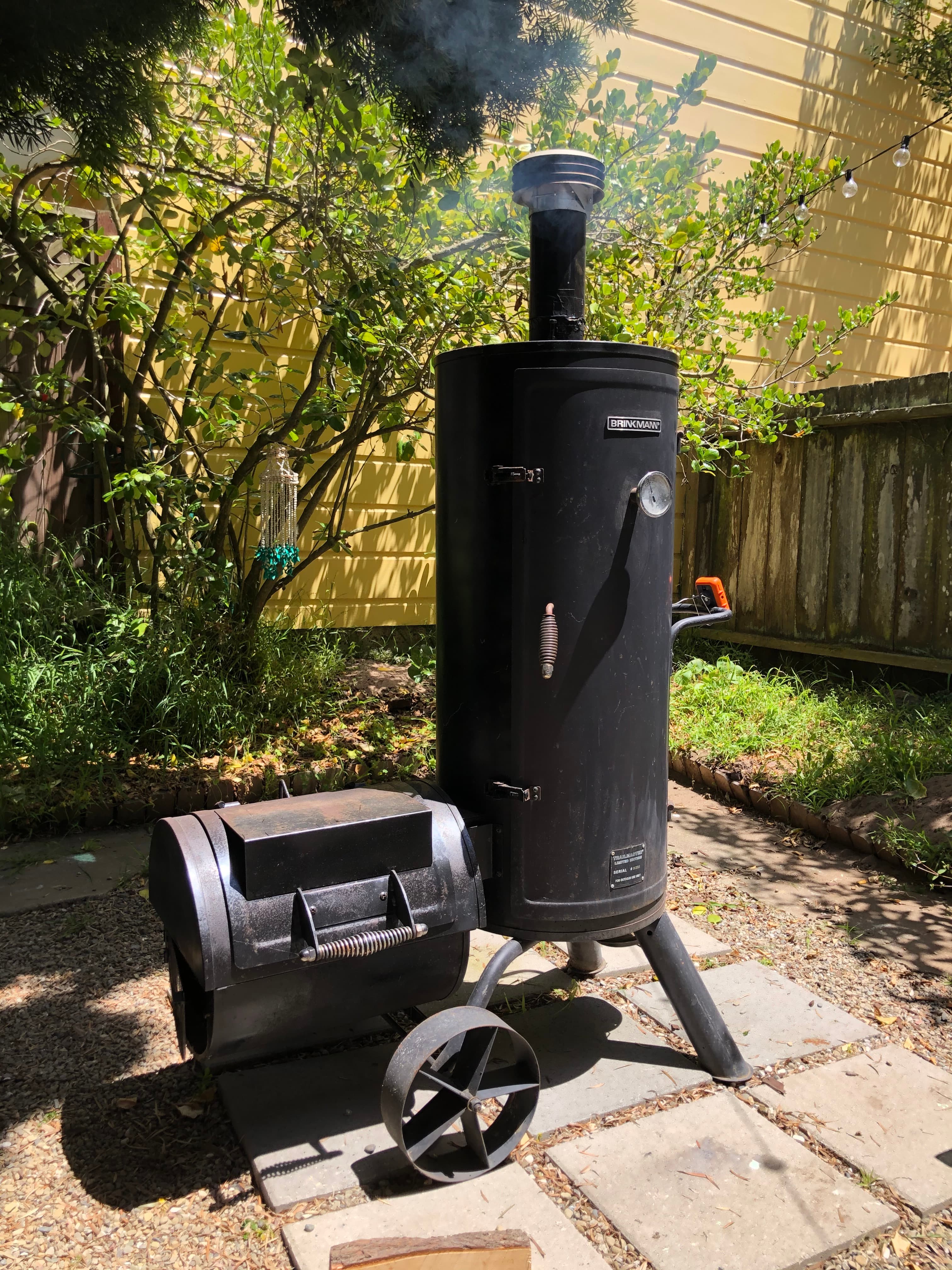
Offset smokers give you the most direct relationship with the fire. Wood burns in a separate firebox, and the resulting heat and smoke travel through the cooking chamber before exiting through a chimney. A well-managed offset can produce exceptional barbecue, but it expects you to participate. You'll add wood, watch the smoke, adjust airflow, and learn how the smoker responds throughout the cook.
None of these is automatically better than the others. If you want to cook dinner quickly on a Tuesday night, gas makes a lot of sense. If you want to put on a pork shoulder and mostly leave it alone, a pellet grill is hard to argue with. If you enjoy tending a wood fire for an afternoon, an offset gives you something the other cookers can't.
Buy for the way you actually want to cook.
Understanding Fire and Airflow
At its most basic, a smoker is a controlled fire with food positioned nearby. Managing that fire requires understanding the relationship between fuel and oxygen.
Opening the intake vents allows more oxygen to reach the fire, which generally makes it burn hotter and more efficiently. Restricting airflow slows combustion and lowers the temperature. Restrict it too much, however, and the fire can begin to smolder instead of burning cleanly. That may give you the temperature you want on the thermometer while producing thick, dirty smoke that leaves bitter flavors on the food.
This is why maintaining exactly 250°F isn't the ultimate goal. A clean fire moving between 240°F and 270°F will usually serve you better than an oxygen-starved fire held stubbornly at exactly 250°F.
Make vent adjustments gradually. A charcoal grill or smoker doesn't respond like a stove burner. Change the airflow, close the lid, and give the cooker time to settle before changing it again. Constant adjustments often create the temperature swings you were trying to prevent in the first place.
You'll eventually learn your cooker. You'll know approximately how much charcoal it needs, where the vents like to sit, how it behaves when the wind picks up, and how quickly it responds when you give the fire more air. That familiarity is one of the things no recipe can teach you.
Direct vs. Indirect Heat
Direct heat means cooking food over the heat source. It's what you use when you want intense heat and rapid browning, whether you're searing a steak, grilling burgers, blistering vegetables, or cooking sausages. The high surface temperature encourages browning and develops the crust that gives grilled food much of its characteristic flavor.
Indirect heat moves the food away from the fire. On a charcoal grill, that can be as simple as pushing the charcoal to one side and putting the food on the other. On a gas grill, you can leave one burner off and cook over that section while the other burners provide heat. Once you close the lid, hot air circulates around the food and the grill begins behaving more like an outdoor oven.
For most grilling, a two-zone setup gives you the best of both. One side of the grill stays hot for direct cooking while the other provides a cooler place for indirect cooking. A thick steak can sear over the hot side before moving to the cooler side to finish. Chicken can cook gently over indirect heat and move over the coals at the end to crisp the skin. If a burger causes a flare-up, you have somewhere to move it instead of watching it burn.
That ability to move food between different heat zones gives you much more control than spreading an even layer of charcoal across the entire grill.
Wood & Flavor
Wood picks the flavor.
Hickory
- Strong, smoky, bacon-like flavor.
- Best for pork and brisket.
Mesquite
- Intense, earthy smoke.
- Best for beef and wild game.
- Can overpower milder foods.
Oak
- Balanced, versatile smoke.
- Great for brisket, sausage, and beef.
- A reliable all-purpose choice.
Apple
- Mild, sweet, slightly fruity smoke.
- Best for pork, poultry, and fish.
Cherry
- Mild, sweet, fruity smoke.
- Works well with pork, poultry, and fish.
Pecan
- Nutty, rich, slightly sweet smoke.
- More pronounced than fruit woods, but less aggressive than hickory.
When in doubt
- Start with oak or apple. They’re versatile and hard to mess up.
Reading the Smoke
Watch the smoke, not just the thermometer. Clean, thin, almost-blue smoke means a good burn and good flavor. Thick white smoke usually means smoldering wood or poor airflow, and it'll turn the food bitter. Black smoke means something's actively burning wrong: dirty grates, dripping grease, bad combustion. It ruins flavor outright. If your smoke looks angry, fix the fire before you worry about the food.
Rubs
A rub is where flavor starts. Dry rubs (salt, sugar, pepper, paprika, garlic and onion powder, maybe cayenne) form a crust (the "bark") and are the easiest way to season anything. Wet rubs are the same idea with oil, mustard, or vinegar mixed in, which helps them stick and adds a little moisture up front. Salt and sugar are doing the real work: salt for flavor and moisture, sugar to balance the salt and caramelize into that crust. Everything else is really just seasoning on top.
Regional Styles
Regional BBQ says a lot about what a place has plenty of.
- Texas is beef country: brisket, dry rub, sauce kept light or skipped entirely.
- The Carolinas are pork territory, pulled and dressed in vinegar or mustard rather than anything sweet.
- Kansas City covers everything (ribs, pork, beef) under a thick, sweet, tomato-based sauce.
- Memphis sticks to ribs, dry rubbed or wet, and argues about which is right.
Essential Tools
A few tools do most of the work: a reliable meat thermometer (guessing is how you overcook everything), a chimney starter if you're running charcoal (faster and cleaner than lighter fluid), a spray bottle for spritzing during long smokes (apple cider vinegar, apple juice, and beer all work), and decent tongs so you're not stabbing anything with a fork and losing the juices.
Common Mistakes
The mistakes are almost always the same ones: opening the lid too often ("if you're lookin', you ain't cookin'", since every temperature drop adds cook time), not actually checking internal temp, dousing charcoal in lighter fluid, over-smoking until it turns bitter, or just running the whole thing too hot for what's supposed to be a slow cook. Patience is most of the skill here. Rest the meat before you cut it, trust the thermometer over the clock, and let low and slow actually be slow.